November 12, 2026
Remodeling a bathroom offers an opportunity to improve your home's comfort, functionality, and appearance. While fixtures, lighting, and cabinetry often receive the most attention, flooring deserves just as much consideration. Bathroom floors must withstand moisture, temperature changes, frequent cleaning, and daily foot traffic without sacrificing style or comfort.
According to the National Kitchen and Bath Association (NKBA), homeowners remodel upwards of 14.2 million bathrooms each year, highlighting the popularity of bathroom improvements. Choosing appropriate flooring is an important part of making these projects successful. The right material can help prevent moisture-related problems, simplify maintenance, and create a cohesive design that complements the rest of the space.
What Are the Best Flooring Materials for Bathrooms?
Several flooring materials work well in bathrooms, but each offers different benefits in terms of appearance, durability, comfort, and maintenance. The best choice depends on how the room will be used and the conditions beneath the finished floor.
Ceramic and porcelain tiles remain popular choices because they offer a broad selection of colors, patterns, shapes, and finishes. Both are suitable for bathroom environments when properly selected and installed. Porcelain tile generally absorbs less water than standard ceramic tile, making it particularly useful in areas exposed to frequent moisture. Tile is also resistant to everyday wear, although grout lines require appropriate sealing and regular cleaning when applicable.
Vinyl flooring provides another practical option. Available in sheets, planks, and tiles, vinyl can imitate hardwood, stone, or ceramic tile without the same material cost. Luxury vinyl plank and tile products are especially appealing to homeowners seeking attractive flooring with a softer, warmer feel underfoot. Sheet vinyl can minimize seams, although the performance of any vinyl floor depends on product quality, installation, and moisture conditions beneath it.
Natural stone, including slate, marble, and travertine, offers distinctive textures and patterns that can create an upscale appearance. However, stone generally costs more than many manufactured alternatives and may require periodic sealing. Some polished stone surfaces can also become slippery when wet, making finish selection important.
How to Ensure Durability and Water Resistance?
Bathroom flooring must handle regular splashes, humid air, and occasional spills. However, water resistance alone does not guarantee that a flooring system will protect the bathroom from moisture damage. The material, installation method, subfloor condition, and waterproofing details all contribute to the finished result.
Porcelain and ceramic tiles resist water effectively, but water can still penetrate inadequately protected grout joints or reach vulnerable areas around fixtures. Proper underlayment, suitable waterproofing where required, and correctly installed transitions help protect the structure beneath the flooring. Bathrooms with showers or tubs deserve particular attention because water exposure is greater near these fixtures.
Vinyl flooring can offer excellent surface water resistance, particularly when products are specifically designed for wet environments. Nevertheless, water that enters through seams, edges, or poorly sealed penetrations may become trapped underneath. Homeowners should also verify manufacturer requirements for subfloor preparation and installation in bathrooms.
Natural stone requires more consideration because certain varieties absorb moisture and may be vulnerable to staining or deterioration without appropriate care. Selecting a suitable stone and following its recommended sealing and maintenance procedures can help preserve its appearance.
Durability also depends on how the bathroom is used. A busy family bathroom may benefit from a hard-wearing, easy-to-clean surface, while a guest bathroom might accommodate more decorative materials.
What Is the Cost Comparison for Different Bathroom Flooring Options?
Bathroom flooring costs vary depending on the material, the size of the room, labor rates, and the condition of the existing subfloor. Comparing the total cost of ownership, rather than just the initial purchase price, helps homeowners make informed decisions.
Vinyl is often among the more affordable choices. Basic products can keep material expenses relatively low, while premium luxury vinyl options cost more but offer improved designs and features. Installation is generally straightforward when the subfloor is properly prepared, potentially reducing labor expenses.
Ceramic and porcelain tiles typically involve higher installation costs because the process requires careful layout, cutting, setting, and grouting. Porcelain may cost more than standard ceramic, depending on the product. However, quality tile can last for decades when correctly installed and maintained, making it an appealing long-term investment.
Natural stone usually commands a premium because of material costs, specialized installation requirements, and ongoing maintenance. Depending on the stone, homeowners may also need professional cleaning or periodic sealing.
A
bathroom remodeling contractor can provide estimates that account for materials, labor, demolition, subfloor repairs, underlayment, and disposal. These additional expenses can significantly affect the final budget. Heated flooring, intricate tile patterns, and extensive waterproofing work may increase costs as well.
How to Match Flooring With Bathroom Design?
Flooring plays a major role in establishing a bathroom's overall atmosphere. Color, texture, pattern, and tile size can influence whether the room feels spacious, cozy, contemporary, or traditional.
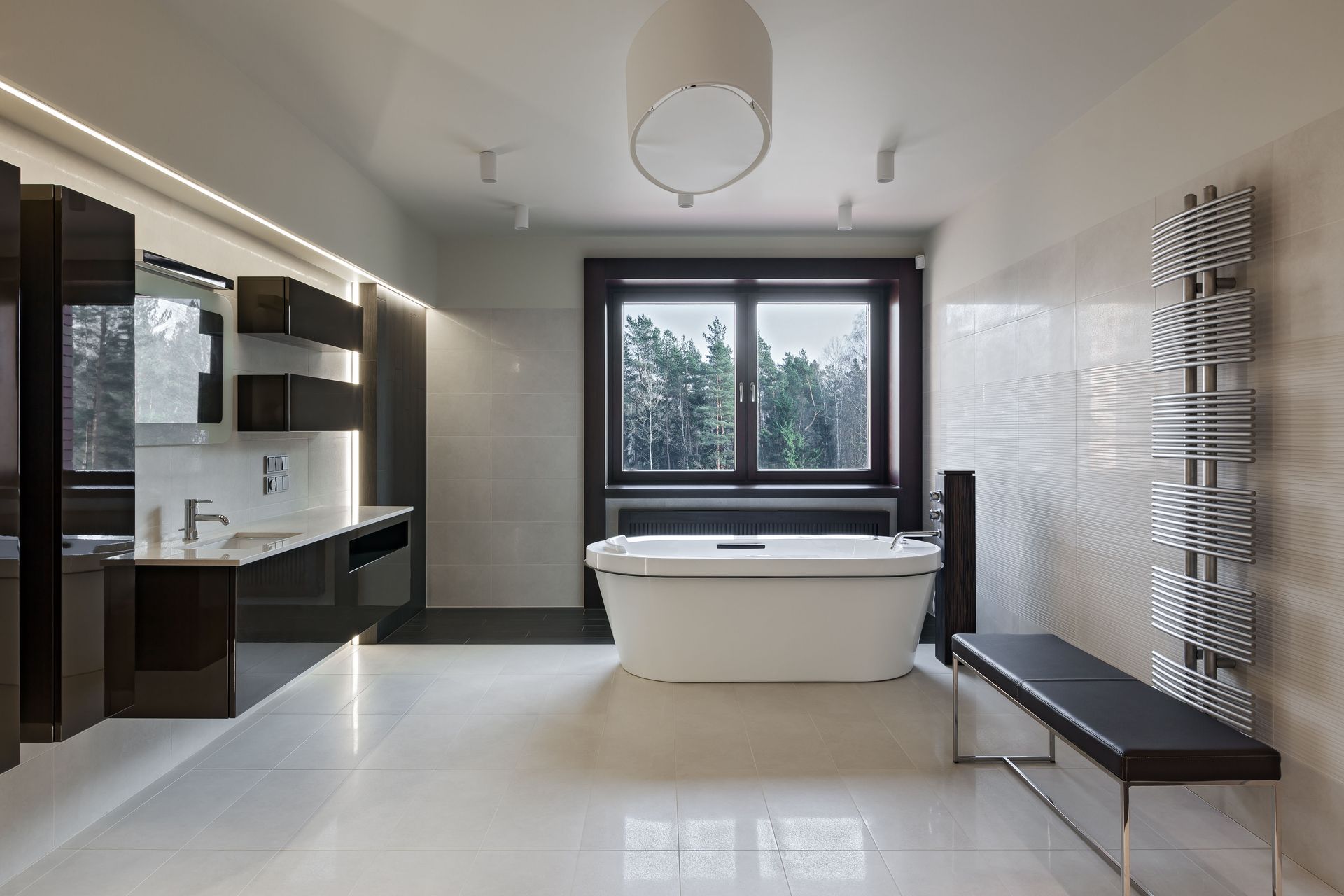
Light-colored flooring can make a smaller bathroom feel brighter and more open, especially when paired with reflective surfaces and adequate lighting. Beige, cream, and warm gray tones create a versatile foundation that complements many cabinet finishes. Darker flooring can provide contrast and visual depth, although it may make a small room feel more enclosed if the walls and lighting are also dark.
Patterns deserve consideration, too. Large-format tiles can create a streamlined appearance with fewer grout lines, while smaller mosaic tiles introduce texture and visual interest. Mosaics may also provide useful flexibility on certain sloped shower floors, provided the selected product is appropriate for the application.
Wood-look vinyl or porcelain tile can introduce warmth without requiring traditional hardwood in a moisture-prone environment. Natural stone, meanwhile, offers distinctive veining and texture that suit both classic and contemporary designs.
When selecting materials, consider how the flooring will coordinate with countertops, wall tile, paint, cabinetry, and fixtures. Bringing samples into the actual bathroom can help you evaluate colors under its lighting conditions.
Can Heated Floors Be Installed in Bathrooms?
Heated flooring is an attractive upgrade for homeowners who want greater comfort, particularly during cold mornings and winter months. Radiant floor heating warms the floor surface, reducing the unpleasant sensation of stepping onto cold tile. Depending on the system and room conditions, it may also contribute to overall thermal comfort.
Electric radiant heating systems commonly use heating cables or mats installed beneath a compatible finished floor. They are often suitable for bathroom renovations because they can be fitted into relatively small spaces. Hydronic systems circulate heated water through tubing beneath the floor and may be appropriate for larger projects or homes with compatible heating infrastructure.
Tile is particularly well suited to radiant heating because it conducts and retains heat effectively. Some vinyl products can also be used with approved heating systems, but homeowners must follow the flooring manufacturer's temperature limits and installation instructions.
A bathroom remodeling contractor can determine whether the existing floor assembly can accommodate radiant heating and coordinate the work with the electrical or plumbing professionals involved. The installation may require additional floor preparation, electrical upgrades, insulation, or thermostat controls.
Make the Right Flooring Choice for Your Bathroom
Choosing bathroom flooring requires balancing appearance, water resistance, durability, maintenance, and budget. Vinyl may suit homeowners seeking affordability and comfort, while ceramic and porcelain tiles offer extensive design options and dependable performance. Natural stone provides distinctive character, and radiant heating can make cold mornings more comfortable.
The most successful choice is one that fits your household's needs and the bathroom's specific conditions. If you're looking for new bathroom flooring, reach out to the team at Rossbach Construction Inc today!